
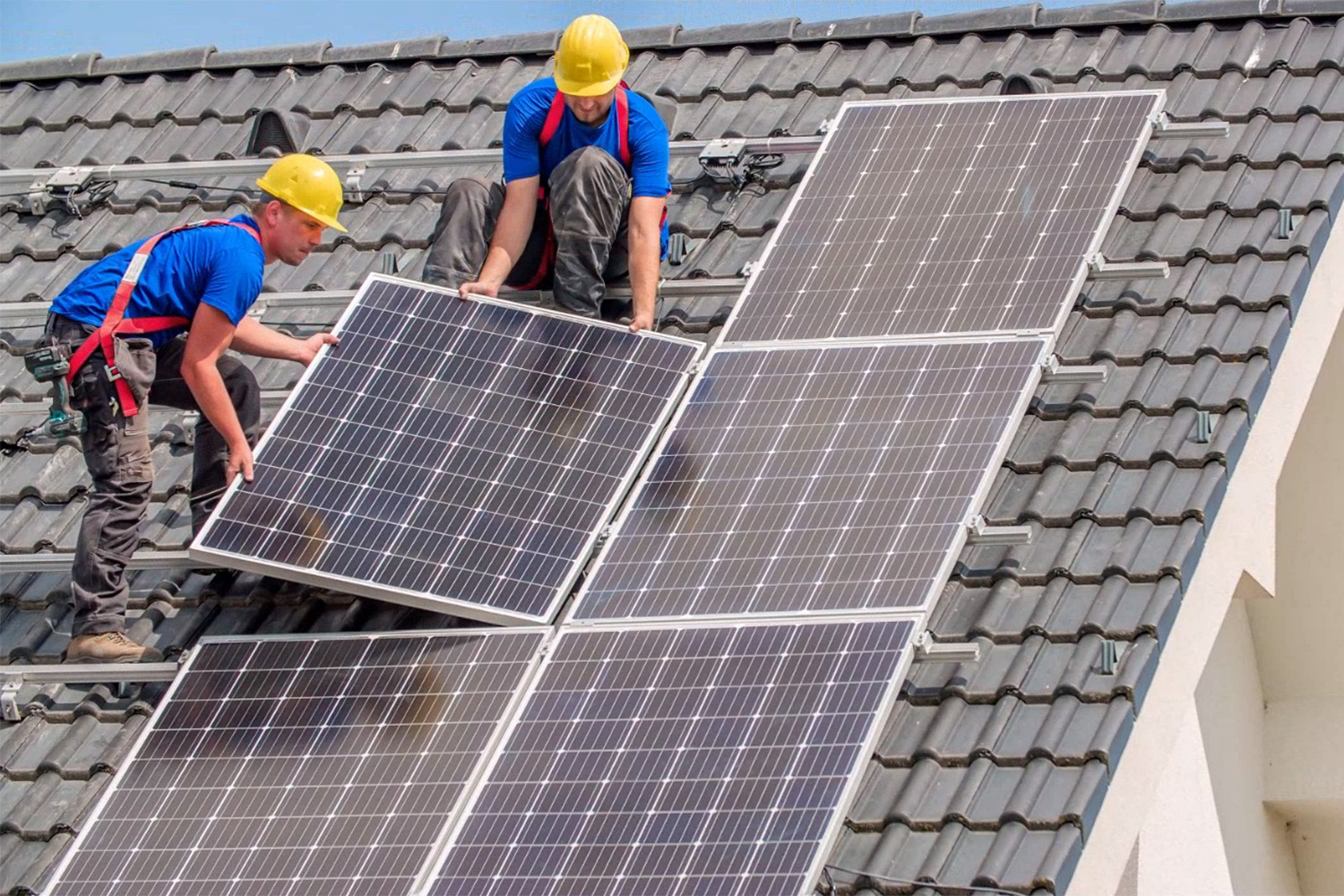
In early August 2025, the California Supreme Court handed down a decision that could reshape the state’s clean energy future. The justices unanimously ruled that the Court of Appeals had erred when it upheld drastic cuts to rooftop solar compensation, known as Net Energy Metering 3.0 (NEM 3.0). Rather than defer automatically to the California Public Utilities Commission (CPUC), the high court ordered the appeals court to conduct a more rigorous review. Coverage of the decision is available at CalMatters.
While the ruling does not immediately overturn NEM 3.0, it represents a critical legal turning point. For the first time in years, California regulators and investor owned utilities face serious scrutiny over policies that many argue have undermined rooftop solar, slowed the state’s clean energy transition, and deepened inequality.
The outcome of this fight will shape whether California continues to lead on distributed renewable energy or retreats toward centralized, utility controlled power systems. At stake are thousands of jobs, billions in household savings, and progress against climate chaos.
Net metering allows rooftop solar owners to earn credits when their panels produce more electricity than they use.
For decades, these credits were pegged to the retail price of electricity, reflecting the value solar provides to the grid and the environment.
In December 2022, the CPUC adopted NEM 3.0, which cut export compensation by roughly 75 to 80 percent. Instead of retail rates, customers were paid at the much lower avoided cost of energy, often pennies per kilowatt hour. The new rules took effect in April 2023.
Utilities justified these cuts by claiming that net metering unfairly shifted costs onto non solar customers, particularly low income households. This argument, known as the cost shift myth, has been heavily promoted by investor owned utilities.
Research tells a different story. A 2021 study by Vibrant Clean Energy found that expanding distributed solar and storage could save California ratepayers an estimated 120 billion dollars by 2050 by avoiding expensive transmission lines and reducing fossil fuel use.
Other analyses highlight social benefits of rooftop solar, from cleaner air and reduced health costs to resilience in blackouts. These benefits rarely appear in CPUC cost benefit formulas.
The impact of NEM 3.0 was swift and severe. Within a year of implementation, residential solar applications plunged by an estimated 82 percent, according to reporting by CalMatters.
The California Solar and Storage Association estimated that more than 17,000 jobs were lost in the sector, devastating an industry once hailed as a cornerstone of the state’s green economy.
For many homeowners, rooftop solar went from a viable option to a risky investment. Payback periods stretched from five to seven years to more than fifteen years in some cases. Small solar companies reported mass layoffs and closures.
These outcomes underscore a central truth. When regulators undermine distributed energy, they weaken California’s ability to meet climate goals. Centralized solutions may benefit utilities, but they slow decarbonization and limit
community control.
The California Supreme Court did not rule on whether NEM 3.0 is legal. Instead, it focused on how the lower courts applied the law. The justices found that the appeals court used an excessively deferential standard of review, essentially rubber stamping the CPUC’s decision. That level of deference was inappropriate given the broad statutory obligations the CPUC holds under California law.
Those obligations include promoting renewable energy, advancing equity for disadvantaged communities, and accounting for environmental benefits. Critics argue the CPUC ignored these duties when it slashed compensation.
By instructing the appeals court to take a harder look, the Supreme Court gave advocates a second chance to prove their case.
Utilities argue that net metering shifted billions in costs to non solar customers who still rely on the grid but do not own solar panels. They claim that without NEM cuts, electricity bills for low income families would rise further. The CPUC echoed these arguments in its decision, portraying NEM 3.0 as necessary to manage affordability.
Solar advocates, environmental groups, and equity organizations counter that the cost shift narrative is a false solution to California’s affordability crisis. They argue that the true drivers of high rates are utility mismanagement, wildfire liabilities, and billions in transmission spending. Rooftop solar lowers system costs, increases reliability, and reduces pollution in frontline communities.
Ignoring those benefits stacks the deck in favor of utility profits, not ratepayer savings.
One of the strongest critiques of NEM 3.0 is its impact on equity. By cutting compensation so drastically, the CPUC effectively closed the door on rooftop solar for working families. Without robust incentives, only wealthy households can afford the upfront costs.
This contradicts California’s climate and equity laws, including Senate Bill 350 from 2015, which directs regulators to ensure disadvantaged communities share in clean energy benefits. Community groups argue that rooftop solar paired with batteries can provide resilience during blackouts, lower bills in neighborhoods with high energy burdens, and reduce pollution from gas peaker plants.
By failing to account for these benefits, critics say the CPUC made rooftop solar less accessible just when low income communities need it most.
The debate over NEM 3.0 highlights a broader problem. Policies that favor centralized mega projects, gas plants branded as clean, and costly new transmission lines are often presented as climate progress. In practice they can function as false solutions that lock in monopoly control while passing costs to ratepayers.
Better solutions already exist. Distributed solar and storage can cut costs, improve resilience, and accelerate decarbonization. A virtual power plant model, where thousands of rooftop systems are coordinated, has been shown to rival or outperform gas peaker plants at lower cost in multiple studies and market pilots.
Great solutions would pair these technologies with equity centered programs so that disadvantaged communities benefit first and most.
By challenging NEM 3.0, advocates are not just defending rooftop solar. They are pushing back against a pattern of false solutions that serve entrenched interests rather than people or the planet.
The case now returns to the Court of Appeals, which must conduct a fresh review using the higher standard set by the Supreme Court. That process could take months. In the meantime, NEM 3.0 remains in effect.
If the appeals court rules against the CPUC, regulators may have to revisit net metering altogether. That would reopen the door to fairer compensation and more ambitious policies that expand access to rooftop solar.
The political stakes are high. California is the largest rooftop solar market in the nation and a bellwether for other states. Decisions made here ripple outward. If the state abandons distributed solar, utilities elsewhere will be emboldened to follow. If California defends it, the rooftop solar movement could rebound nationwide.
California stands at a crossroads. For years, the state has promoted ambitious climate goals while adopting policies that undermine one of the most effective tools available. The Supreme Court’s ruling is a reminder that regulators cannot ignore their broader obligations or hide behind technical jargon.
In an age of climate chaos, the stakes are too high for deference to the status quo. The choice is clear. Continue down a path of false solutions that enrich utilities and delay progress, or embrace better solutions that democratize energy, create jobs, and protect vulnerable communities.
Great solutions exist, but they require political will, transparency, and a willingness to stand up to powerful interests. California’s rooftop solar fight is not just about energy credits. It is about who controls the future of power in the world’s fifth largest economy.
The Supreme Court has reopened the debate. The question now is whether policymakers will seize this moment to correct course or allow utilities to keep dimming the sun.